
Autonomous Trucking Bridge to Revolutionize Freight Flow at BNSF Fort Worth: What it Means for Drivers and Fleets
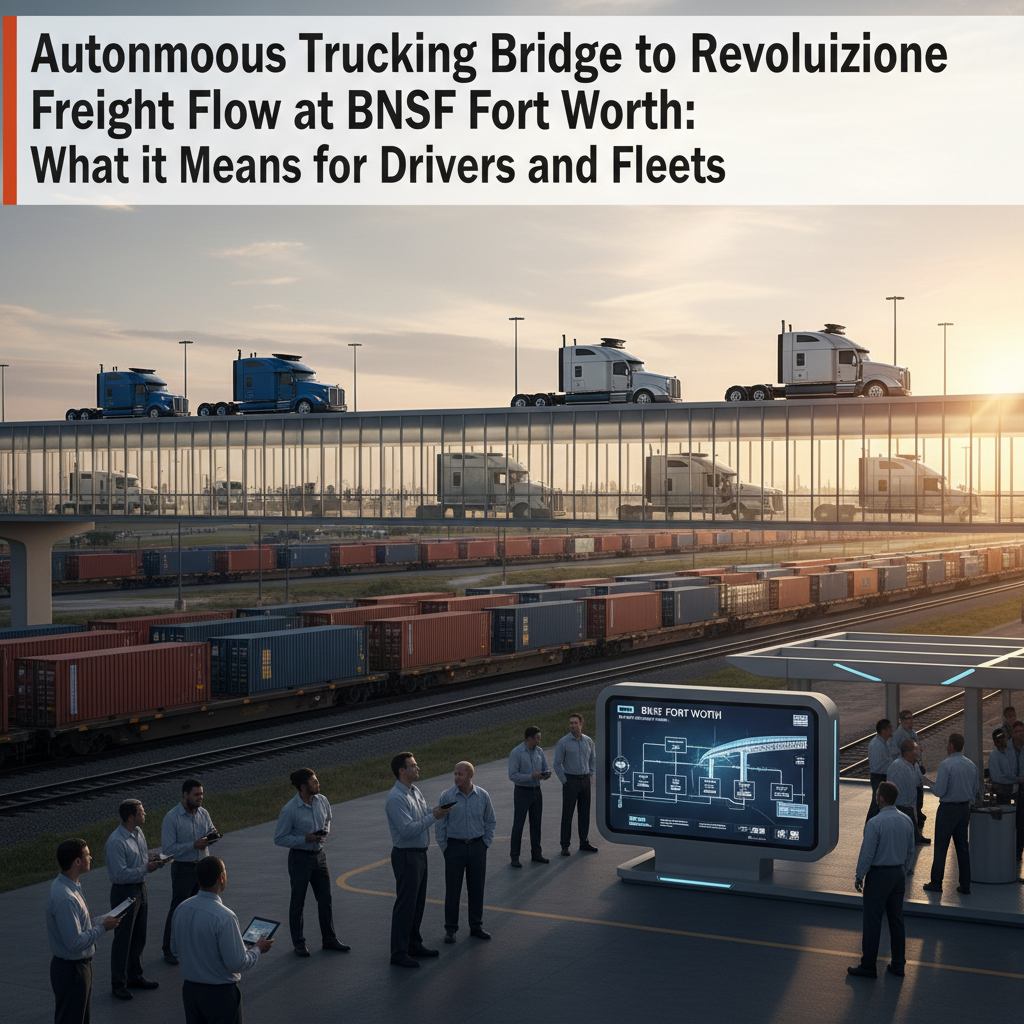
The landscape of freight transportation is constantly evolving, and a groundbreaking development in Fort Worth, Texas, is set to usher in a new era of efficiency for the trucking industry. A dedicated autonomous trucking bridge, a $20 million, three-lane infrastructure project, is slated for completion by the end of 2026. This innovative bridge will create a direct, private link between a major BNSF intermodal facility and the vast Alliance warehouses, promising to significantly enhance freight flow, reduce congestion on public roads, and integrate cutting-edge autonomous vehicle technology into daily operations. For CDL truck drivers and fleet managers, this project represents both a glimpse into the future of logistics and a tangible improvement in current operational dynamics.
This initiative is more than just a bridge; it's a strategic investment in optimizing the supply chain and addressing the growing demands of modern commerce. By establishing a dedicated conduit for commercial trucks, including those operated autonomously, the project aims to streamline the movement of goods, cutting down on transit times and improving the predictability of deliveries. This kind of infrastructure development is crucial as freight volumes continue to rise, placing increasing pressure on existing road networks and intermodal facilities. Understanding the implications of such projects is vital for everyone involved in the trucking sector, from the individual driver navigating routes to the fleet manager optimizing their entire operation.
The Strategic Importance of the AllianceTexas Development
The autonomous trucking bridge is not an isolated project but an integral part of the sprawling 27,000-acre AllianceTexas development. This master-planned community, spearheaded by Hillwood Properties, is a global hub for logistics, manufacturing, and technology, attracting major corporations and fostering innovation. The Alliance Global Logistics Hub, a critical component of AllianceTexas, is home to numerous distribution centers, manufacturing plants, and the BNSF Alliance Intermodal Facility, one of the busiest inland ports in the United States. The sheer volume of freight moving through this area necessitates advanced solutions to maintain efficiency and prevent bottlenecks.
For fleet managers, the AllianceTexas development represents a significant operational nexus. The ability to move freight seamlessly between the intermodal facility and the surrounding warehouses without contending with public road traffic offers substantial advantages. It translates directly into faster turnaround times, reduced fuel consumption due and wear-and-tear on equipment, and improved driver productivity. This strategic location and its continuous infrastructure enhancements make it a prime area for trucking companies looking to optimize their supply chain and enhance their competitive edge.
How the Autonomous Bridge Will Function
The new bridge will span over FM 156, effectively creating an exclusive, elevated pathway for commercial trucks. Crucially, it will be closed to regular public traffic, ensuring a dedicated and uninterrupted flow for freight. This exclusivity is a key feature, allowing for optimized speeds and predictable transit times between the BNSF facility and the Alliance warehouses. The design includes three lanes, providing ample capacity for the anticipated volume of truck traffic.
One of the most forward-looking aspects of this project is its explicit design to accommodate autonomous semi-trucks. These self-driving vehicles have already been operating within the Alliance warehouses since November 2025, demonstrating the region's commitment to integrating advanced technologies into its logistics framework. The bridge will serve as a vital artery for these autonomous vehicles, allowing them to operate in a controlled environment and further proving the viability and efficiency of automated freight movement. For CDL drivers, this means interacting with a more structured and potentially safer environment where human-driven and autonomous trucks can coexist and complement each other's operations, particularly in designated zones.
Benefits for CDL Truck Drivers
While the term 'autonomous trucking' often sparks discussions about job security, this specific project offers several tangible benefits for human CDL truck drivers operating in and around the Fort Worth area:
- Reduced Congestion on Public Roads: By diverting a significant volume of commercial truck traffic onto a private bridge, the project will alleviate congestion on public roads like FM 156. This means less time spent in traffic jams for drivers, leading to more efficient routes and potentially less stress.
- Improved Safety: Less truck traffic on public roads can contribute to a safer driving environment for all motorists. Furthermore, the controlled environment of the bridge, especially for autonomous vehicles, is designed with safety protocols in mind, potentially reducing the risk of accidents in this specific corridor.
- Faster Turnaround Times: For drivers whose routes include pickups or deliveries at the BNSF intermodal facility or the Alliance warehouses, the dedicated bridge means quicker access and egress. This efficiency can lead to more productive shifts, reduced waiting times at gates, and the ability to complete more loads within legal hours of service (HOS) regulations.
- Focus on More Complex Driving Tasks: As autonomous technology handles repetitive, point-to-point transfers in controlled environments, human drivers can focus on more complex, last-mile deliveries, specialized hauling, or routes that require nuanced decision-making and interaction with diverse road conditions and urban environments. This could evolve the role of the CDL driver, making it more focused on skilled tasks.
- Predictability and Planning: The consistent flow offered by the bridge allows for better route planning and scheduling. Drivers can anticipate more accurate arrival and departure times, which improves their ability to manage their HOS and personal time more effectively.
Advantages for Fleet Managers and Trucking Companies
For fleet managers, the implications of this autonomous trucking bridge are even broader, touching upon operational efficiency, cost savings, and strategic planning:
- Enhanced Operational Efficiency: The primary benefit is a significant improvement in the speed and reliability of freight movement between two critical logistics points. This directly impacts supply chain velocity and customer satisfaction.
- Cost Reductions: Faster transit times mean less fuel consumption due to idling or stop-and-go traffic. Reduced wear and tear on trucks from constant braking and acceleration in congested areas also lowers maintenance costs. Furthermore, optimized driver productivity can lead to better utilization of labor resources.
- Increased Throughput: With a dedicated and efficient route, fleets can move more freight through the AllianceTexas hub in the same amount of time, increasing their overall capacity and revenue potential.
- Data-Driven Optimization: The integration of autonomous vehicles and dedicated infrastructure provides opportunities for collecting vast amounts of data on freight movement. Fleet managers can leverage this data to further optimize routes, schedules, and resource allocation, leading to continuous improvement.
- Competitive Advantage: Trucking companies that can leverage such advanced infrastructure will gain a competitive edge by offering faster, more reliable, and potentially more cost-effective services to their clients. This positions them as leaders in adopting innovative logistics solutions.
- Driver Retention and Recruitment: By offering more efficient routes and reducing time spent in traffic, fleets can improve the quality of life for their drivers, which is a significant factor in driver retention and recruitment in a challenging labor market.
The Role of Autonomous Technology in the Future of Trucking
This project is a clear indicator of the growing role of autonomous technology in the trucking industry. While fully autonomous, driverless trucks on public highways are still some years away from widespread adoption, projects like the Fort Worth bridge demonstrate the practical application of this technology in controlled environments. These 'middle-mile' or 'hub-to-hub' applications are often seen as the first viable steps for autonomous trucking.
For CDL drivers, this doesn't necessarily mean an immediate replacement, but rather an evolution of roles. Many industry experts foresee a future where human drivers handle the complex first and last-mile segments, while autonomous trucks manage the long, repetitive stretches on highways or dedicated routes like this bridge. This collaborative model could address the driver shortage by making the profession more appealing and efficient, allowing human drivers to focus on the more engaging and skilled aspects of their job.
Fleet managers should view these developments as opportunities to strategically integrate new technologies into their operations. Understanding the capabilities and limitations of autonomous systems, investing in training for their workforce, and adapting their operational models will be crucial for staying competitive. The Fort Worth bridge serves as a real-world testbed and a blueprint for how such integrations can be successfully implemented.
Looking Ahead: Project Completion and Industry Impact
The $20 million autonomous trucking bridge is expected to be completed by November 2026, marking a significant milestone for the AllianceTexas development and the broader trucking industry. Its successful implementation will likely serve as a model for similar projects in other major logistics hubs across the country. As freight volumes continue to grow, innovative infrastructure solutions that combine traditional construction with advanced technology will become increasingly vital.
For CDL truck drivers, staying informed about these changes is key. Understanding how new infrastructure and technology will affect daily routes, hours of service, and job responsibilities will allow for better adaptation and career planning. For fleet managers, the challenge and opportunity lie in leveraging these advancements to optimize their operations, enhance their service offerings, and ensure their fleets remain at the forefront of the logistics industry.
This project underscores a fundamental truth about the trucking industry: it is dynamic and constantly adapting. The Fort Worth autonomous trucking bridge is not just a piece of infrastructure; it's a testament to the industry's commitment to innovation, efficiency, and preparing for the future of freight transportation. It promises a smoother, faster, and more integrated logistics experience for all involved, from the driver behind the wheel to the end consumer receiving their goods.
Helpful Resources for CDL Drivers
Comments (0)
Sign in to join the conversation
Sign In to CommentNo comments yet. Be the first to share your thoughts!
Explore More
Driver Resources
Educational guides on CDL licensing, salary expectations, and route planning tips.
Browse CDL Jobs
Find your next driving opportunity. Search by location, route type, and CDL class.
CDL Salary Guide
Understand how pay varies by experience, route type, and location in the trucking industry.