FMCSA Closes Dangerous CDL Loophole: What Truckers and Fleet Managers Need to Know About New Non-Domiciled CDL Rules
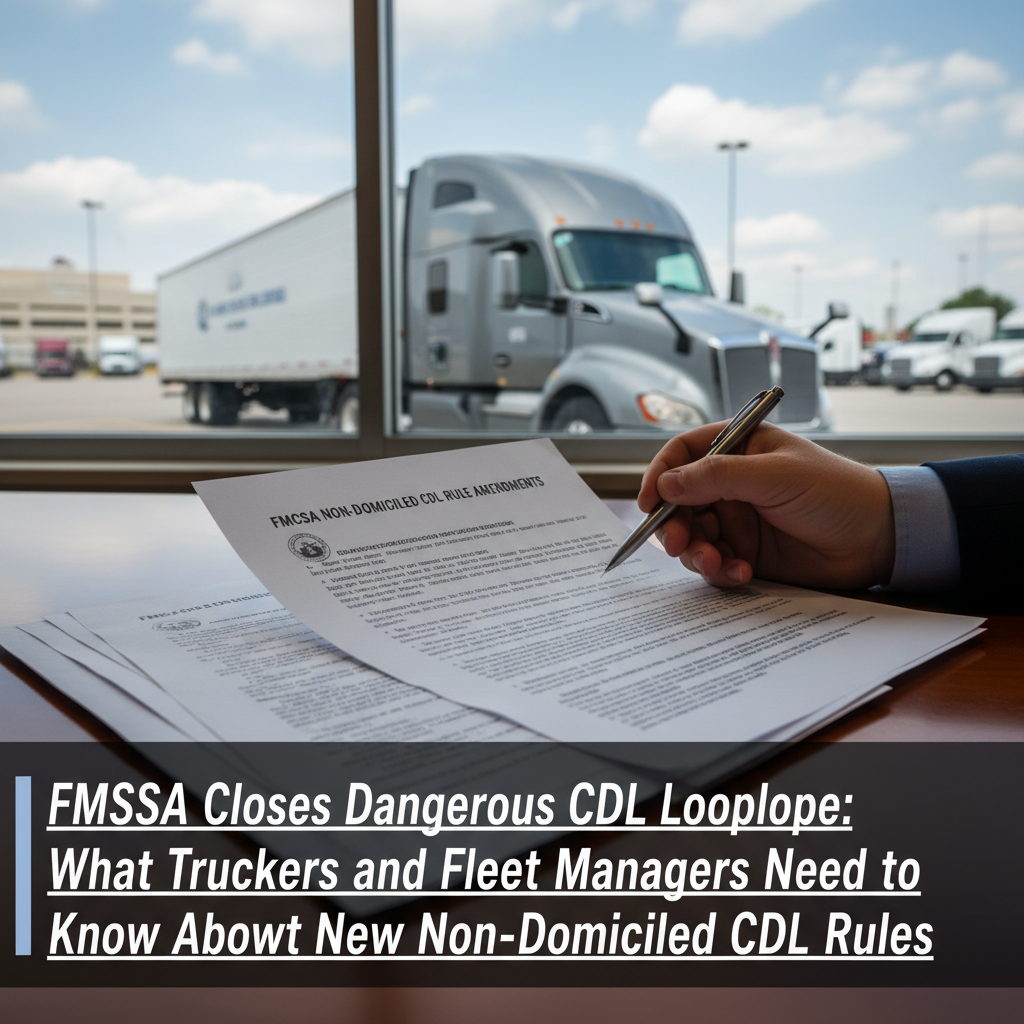
The Federal Motor Carrier Safety Administration (FMCSA) has finalized a critical new rule that fundamentally alters how non-domiciled Commercial Driver's Licenses (CDLs) are issued in the United States. This significant regulatory change, which takes effect 30 days after its publication in the Federal Register, is poised to enhance highway safety, protect the integrity of the CDL system, and ensure that only properly vetted and qualified individuals are operating commercial motor vehicles (CMVs) on American roads. For CDL truck drivers, this means a more level playing field and increased confidence in the professionalism of their peers. For fleet managers, it signifies a reduction in potential risks associated with inadequately screened drivers and a reinforcement of safety standards across the industry.
This long-anticipated ruling addresses a loophole that has, for years, allowed individuals with insufficient background checks to obtain CDLs, posing substantial safety risks. The core of the problem lay in the acceptance of Employment Authorization Documents (EADs) as sufficient proof of eligibility for a CDL, a practice now definitively ended. This article will delve into the specifics of the new regulations, explore the historical context that necessitated these changes, and provide actionable insights for both professional truck drivers and fleet management teams navigating this evolving regulatory landscape.
Understanding the Historical Context: How the Loophole Emerged
For decades, the American CDL system operated on a foundational premise: an applicant presents verifiable identification, their driving history is cross-referenced against national databases, and if clean, a license is issued. This system works effectively for U.S. citizens and lawful permanent residents because comprehensive data regarding violations, DUIs, crash histories, and suspensions is readily available and interconnected across state DMVs. However, a critical blind spot existed for foreign nationals seeking non-domiciled CDLs.
More than 30 states were issuing CDLs to individuals who presented only an Employment Authorization Document (EAD). An EAD is, by definition, merely a work permit, granting authorization to be employed in the U.S. Crucially, it provides no information whatsoever about an individual's driving history, their record of reckless driving in their home country, involvement in fatal crashes overseas, or even the legitimacy of their foreign driving credentials. This meant that individuals with potentially dangerous driving records, or even no legitimate driving experience at all, could obtain a CDL to operate tractor-trailers, tankers, hazmat loads, and passenger buses without any meaningful safety screening.
This systemic failure was not unknown. The FMCSA, state authorities, and various industry stakeholders were aware of the issue. However, despite widespread knowledge, concrete action remained elusive until the human cost became undeniable. The industry witnessed the rise of 'chameleon carrier' networks exploiting these gaps, 'CDL mills' churning out licenses to unqualified individuals, and even government-funded workforce programs funneling inexperienced individuals into CDL programs with minimal oversight. Reports of Third-Party Examiner fraud in states like California, New York, and Colorado further highlighted the vulnerabilities. The tragic incidents that ultimately forced this regulatory closure underscore the severe consequences of these unchecked practices, emphasizing the urgent need for a more robust and secure CDL issuance process.
The New Rule: Key Provisions and What They Mean
Transportation Secretary Sean Duffy's signing of this final rule marks a significant step toward rectifying these long-standing safety deficiencies. The new regulations introduce several critical changes designed to enhance vetting and ensure the competence of non-domiciled CDL holders. Here's a breakdown of the core provisions:
1. Elimination of Employment Authorization Documents (EADs) as CDL Eligibility Proof: This is perhaps the most impactful change. EADs are no longer accepted as standalone proof for obtaining a CDL. If an applicant presents only an EAD at a state DMV, they will not be issued a commercial license. This move acknowledges that EADs were never intended to serve as transportation safety documents and were wholly inadequate for that purpose.
2. Restricted Non-Domiciled CDL Eligibility to Specific Visa Categories: Eligibility for a non-domiciled CDL is now narrowly limited to three specific visa categories: H-2A agricultural workers, H-2B temporary non-agricultural workers, and E-2 treaty investors. The crucial distinction here is that these visa classes already undergo enhanced interagency vetting by the federal government prior to their arrival in the U.S. This means that individuals in these categories have already been subjected to a degree of background scrutiny, addressing the previous concern of completely unknown backgrounds.
3. Requirement for Unexpired Foreign Passport and Form I-94 Documentation: Applicants must now present an unexpired foreign passport and their Form I-94 documentation. These documents must be original; photocopies or expired documents will not be accepted. This ensures that applicants provide current and legitimate identification and immigration status information.
4. Mandatory SAVE System Verification: This provision introduces the enforcement teeth of the new rule. Every state DMV is now required to run applicants through the Systematic Alien Verification for Entitlements (SAVE) database, operated by U.S. Citizenship and Immigration Services (USCIS). If the SAVE system cannot confirm an applicant's lawful immigration status, a CDL will not be issued. This is a hard stop, eliminating any state discretion or potential workarounds that might have existed previously. It ensures a standardized, federal-level verification process for all non-domiciled CDL applicants.
These changes collectively aim to ensure that foreign nationals operating CMVs in the U.S. have undergone proper vetting, possess legitimate identification, and hold a lawful immigration status that aligns with the purpose of their presence in the country. This significantly reduces the risk of unqualified or unvetted individuals gaining access to the controls of heavy commercial vehicles.
Impact on CDL Truck Drivers: A Safer and More Professional Industry
For the vast majority of professional CDL truck drivers, these new regulations represent a positive development. While the changes directly affect non-domiciled CDL holders, their ripple effects will be felt across the entire industry:
- Enhanced Highway Safety: The most immediate benefit is improved safety on our nation's roads. By ensuring that all CMV operators, regardless of their origin, have been properly vetted and meet stringent safety criteria, the risk of accidents caused by unqualified drivers is significantly reduced. This protects not only other motorists but also truck drivers themselves, who are often the first responders to incidents involving other CMVs.
- Increased Professionalism and Trust: The closure of this loophole helps restore confidence in the CDL system. It reinforces the idea that obtaining a CDL is a serious responsibility requiring proper qualifications and adherence to safety standards. This can elevate the public perception of the trucking profession and foster greater trust among drivers themselves.
- Fairer Competition: When unqualified drivers are allowed to operate CMVs, it can create an unfair competitive environment. These drivers might be employed at lower wages due to their lack of proper vetting or training, potentially undercutting legitimate, professional drivers and carriers who invest heavily in safety and compliance. The new rule helps level the playing field.
- Reduced Risk of Exploitation: The previous system was ripe for exploitation, with unscrupulous actors taking advantage of lax regulations. By tightening the requirements, the FMCSA helps protect foreign nationals from being exploited by those who would push them into driving roles without proper training or documentation, ultimately benefiting the entire workforce.
Professional drivers can take pride in knowing that the industry is moving towards a more secure and accountable system, one that prioritizes safety and competence above all else. This reinforces the value of their own dedication to training, safety, and compliance.
Implications for Fleet Managers: Strengthening Compliance and Mitigating Risk
Fleet managers bear significant responsibility for the safety and compliance of their operations. The new non-domiciled CDL rules have direct and important implications for how fleets recruit, hire, and manage their driver workforce:
- Reinforced Due Diligence in Hiring: While many reputable fleets already conduct thorough background checks, these new rules provide an additional layer of federal verification. Fleet managers must ensure their hiring processes are updated to reflect the new requirements. This means verifying not just a CDL's validity, but also the underlying immigration status and documentation that supports its issuance for non-domiciled drivers. Relying solely on a physical CDL without understanding its foundation is no longer sufficient.
- Understanding Visa Categories: Fleet managers who employ or are considering employing foreign nationals will need to be intimately familiar with the H-2A, H-2B, and E-2 visa categories. Understanding the specific conditions and limitations of these visas is crucial for compliance. It's important to note that these visas are typically for temporary employment, which will influence workforce planning.
- Enhanced Training and Onboarding: Even with enhanced vetting, the onus remains on fleet managers to provide comprehensive training. Drivers, particularly those new to the U.S. or specific types of operations, require thorough onboarding that covers U.S. traffic laws, company safety protocols, and specific equipment operation. The rule ensures a baseline of vetting, but quality training is always paramount.
- Mitigating Liability and Insurance Risks: Employing drivers who obtained their CDLs through loopholes or inadequate vetting posed significant liability and insurance risks for fleets. Accidents involving such drivers could lead to higher insurance premiums, costly litigation, and severe reputational damage. By closing this loophole, the FMCSA helps fleets mitigate these risks, leading to a more stable and predictable operating environment.
- Staying Informed on Regulatory Changes: The trucking industry is dynamic, with regulations constantly evolving. Fleet managers must maintain robust systems for staying informed about FMCSA updates, state-specific requirements, and immigration policies that impact their driver pool. Partnering with legal counsel specializing in immigration and transportation law can be invaluable.
- Focus on Retention of Qualified Drivers: With a more stringent entry process, the pool of truly qualified and vetted drivers may become more defined. This underscores the importance for fleet managers to focus on retaining their best drivers through competitive compensation, excellent working conditions, and a strong safety culture. Investing in current drivers becomes even more critical.
Ultimately, these regulations empower fleet managers to build a more secure and compliant workforce. While it may require adjustments to hiring practices, the long-term benefits of increased safety, reduced risk, and a more professional industry are substantial.
Actionable Takeaways for the Trucking Community
For CDL Truck Drivers:
- Stay Informed: Keep abreast of all FMCSA regulations. While this specific rule primarily impacts non-domiciled CDL issuance, understanding the broader regulatory landscape is part of being a professional driver.
- Advocate for Safety: Continue to uphold the highest safety standards in your own driving. Your professionalism reinforces the integrity of the industry.
- Report Concerns: If you encounter situations that raise concerns about driver qualifications or safety practices, report them through appropriate channels. A safer industry benefits everyone.
For Fleet Managers:
- Review Hiring Protocols: Immediately review and update your hiring and background check protocols to align with the new FMCSA requirements for non-domiciled CDL applicants. Ensure your HR and recruitment teams are fully aware of these changes.
- Verify Documentation Thoroughly: Implement rigorous procedures for verifying all documentation presented by non-domiciled CDL applicants, including unexpired foreign passports, Form I-94, and confirmation of appropriate visa categories (H-2A, H-2B, E-2).
- Utilize SAVE System: Understand that state DMVs are now mandated to use the SAVE system. While this is primarily a state function, fleets should be aware that any discrepancy in an applicant's lawful immigration status will result in a CDL denial.
- Legal Consultation: Consider consulting with legal experts specializing in immigration and transportation law to ensure full compliance and to navigate any complex cases involving foreign national drivers.
- Invest in Training: Reiterate and enhance your training programs for all drivers, particularly those who may be new to U.S. driving regulations or specific equipment. A well-trained driver is your best asset.
- Communicate with Drivers: Maintain open lines of communication with your current drivers, addressing any questions or concerns they may have regarding these regulatory changes. Transparency builds trust.
Looking Ahead: The Future of CDL Issuance and Highway Safety
The closure of this dangerous loophole represents a significant victory for highway safety and the integrity of the U.S. commercial driving system. It underscores the FMCSA's commitment to ensuring that only qualified and properly vetted individuals are entrusted with operating commercial motor vehicles. While the immediate impact is on non-domiciled CDLs, the broader message is clear: safety and compliance are non-negotiable.
This rule is a testament to the fact that persistent advocacy and the undeniable human cost of regulatory failures can eventually lead to necessary reforms. For CDL Jobs Network, our mission remains to connect qualified drivers with reputable carriers, and this new rule helps solidify the foundation of trust and safety upon which our industry operates. By embracing these changes, the trucking community can collectively work towards a safer, more professional, and more secure future for everyone on the road. The journey to a fully compliant and secure CDL system is ongoing, but this latest action marks a crucial step forward, protecting lives and upholding the high standards that define the professional truck driving profession.
Helpful Resources for CDL Drivers
Comments (0)
Sign in to join the conversation
Sign In to CommentNo comments yet. Be the first to share your thoughts!
Explore More
Driver Resources
Educational guides on CDL licensing, salary expectations, and route planning tips.
Browse CDL Jobs
Find your next driving opportunity. Search by location, route type, and CDL class.
CDL Salary Guide
Understand how pay varies by experience, route type, and location in the trucking industry.