Idaho Considers Equalizing Speed Limits for Commercial Vehicles: What It Means for Truckers and Fleets
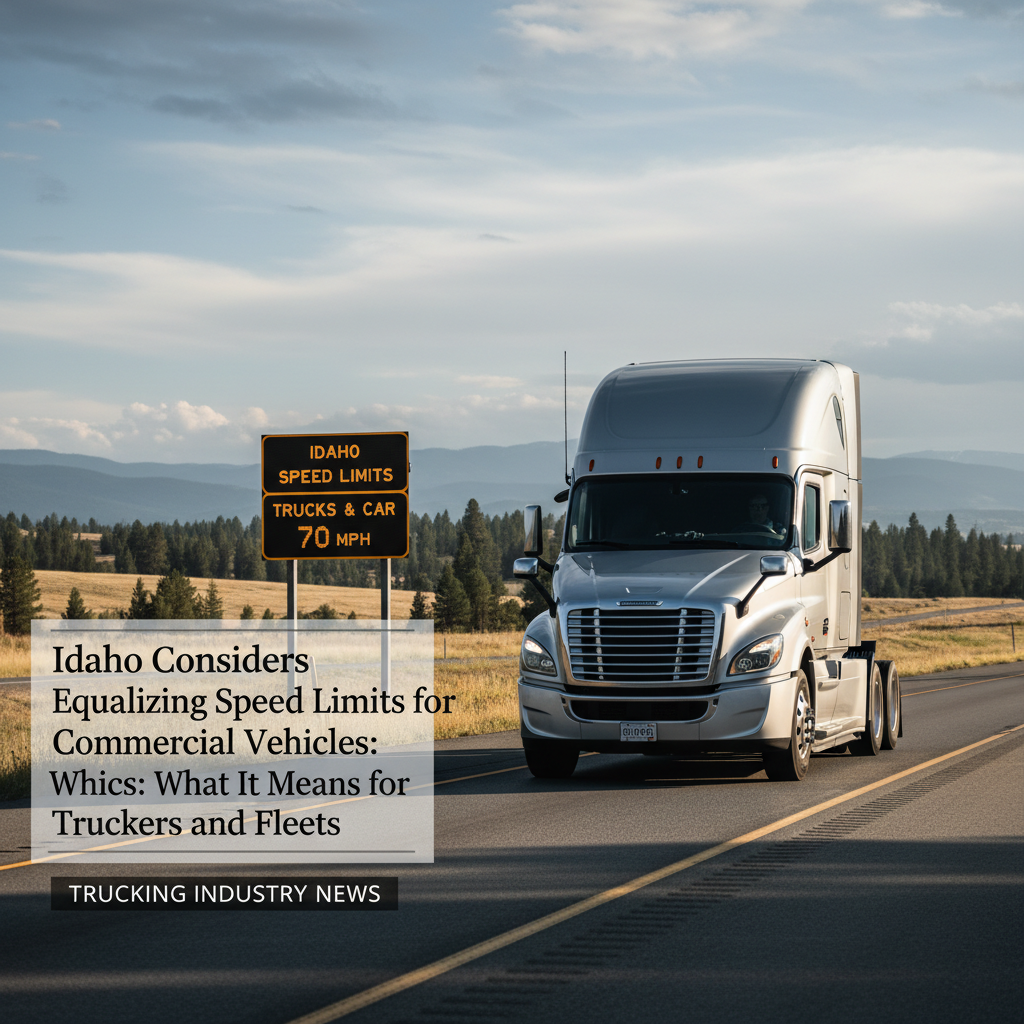
The landscape of highway regulations is constantly evolving, and a new legislative proposal in Idaho is sparking significant discussion within the trucking community. House Bill 664, recently introduced, aims to eliminate the long-standing practice of imposing lower speed limits on commercial motor vehicles (CMVs) compared to passenger cars on Idaho roadways. This potential shift could have profound implications for CDL truck drivers, fleet managers, and overall road safety, warranting a closer look at its rationale and potential impacts.
For years, many states, including Idaho, have maintained differential speed limits, often setting the maximum speed for heavy-duty trucks several miles per hour lower than for lighter vehicles. The traditional justification for this approach has been rooted in safety concerns, assuming that larger, heavier trucks require more stopping distance and are inherently less maneuverable, thus necessitating reduced speeds to mitigate accident risks. However, this new bill challenges that conventional wisdom, proposing that such variances might actually contribute to, rather than prevent, safety issues on the road.
The Core Proposal: Equalizing Speed Limits
House Bill 664 specifically seeks to amend existing Idaho law that mandates lower speed limits for commercial vehicles. If enacted, this legislation would apply to trucks weighing 26,000 pounds or more, effectively allowing them to travel at the same posted speed limits as passenger vehicles. The bill's proponents argue that a uniform speed limit across all vehicle types could lead to a more consistent traffic flow, reducing the number of overtakes and undercuts that can often be hazardous, especially on multi-lane highways.
The bill text itself posits that the variance in speed limits is a significant contributor to accidents. The logic is compelling: when trucks are forced to travel at a slower pace than the majority of traffic, it creates speed differentials. These differentials can lead to increased lane changes by both trucks and cars, more instances of frustrated drivers attempting to pass, and a general disruption of traffic harmony. Imagine a scenario where a truck is legally traveling at 65 mph, while cars around it are cruising at 75 mph. This 10 mph difference can necessitate frequent braking, acceleration, and lane changes, all of which elevate the potential for collisions. By aligning the speed limits, the bill aims to foster a more predictable and uniform flow of traffic, potentially making Idaho's highways safer for everyone.
Safety Implications: A Closer Look
The claim that varying speed limits cause more accidents than a singular speed limit is a point of considerable debate in transportation safety circles. Proponents of uniform speed limits often cite studies suggesting that speed differentials, rather than absolute speed, are a primary factor in accident causation. When all vehicles move at roughly the same speed, regardless of what that speed is, the number of interactions requiring evasive maneuvers tends to decrease. This creates a more stable driving environment.
For CDL drivers, this could mean less stress from constantly monitoring and adjusting to faster-moving traffic. It could also reduce the pressure to exceed the speed limit to keep up with the flow, a practice some drivers admit to engaging in out of perceived necessity. Fleet managers, too, would benefit from a clearer, more consistent regulatory environment, potentially simplifying route planning and driver training protocols related to speed compliance.
However, it's crucial to acknowledge the counterarguments. Critics of uniform speed limits for CMVs often emphasize the physical characteristics of heavy trucks. Their increased weight means longer stopping distances, and their larger size can limit visibility for other drivers, especially in adverse weather conditions or during sudden maneuvers. Some safety advocates worry that allowing trucks to travel at higher speeds could exacerbate the severity of accidents when they do occur, given the immense kinetic energy involved. The debate often boils down to whether the benefits of reduced speed differential outweigh the risks associated with higher absolute speeds for heavy vehicles.
Operational Efficiencies for Truck Drivers and Fleets
Beyond safety, the proposed change carries significant operational implications for the trucking industry. For CDL truck drivers, maintaining a consistent speed with other traffic can lead to a smoother, less fatiguing driving experience. Constantly slowing down and speeding up, or navigating around slower-moving trucks while being passed by faster cars, adds to driver stress and can contribute to fatigue. A uniform speed limit could allow drivers to maintain a more steady pace, potentially improving their overall well-being and focus on the road.
From a fleet management perspective, the elimination of lower speed limits for CMVs could translate into tangible economic benefits. Increased average speeds, even by a few miles per hour, can significantly impact transit times. For long-haul operations across Idaho, this could mean earlier deliveries, improved on-time performance, and potentially the ability to complete more runs within a given timeframe. This enhanced efficiency directly impacts the bottom line, reducing fuel consumption per mile by avoiding constant acceleration and deceleration, and optimizing driver hours of service (HOS) by allowing for more ground to be covered within legal driving windows.
Consider a fleet operating multiple trucks through Idaho daily. If each truck can shave even 30 minutes off a typical cross-state journey, the cumulative savings in driver wages, fuel, and equipment utilization over a year could be substantial. This increased productivity could make Idaho a more attractive corridor for freight movement, benefiting the state's economy as well.
Fuel Economy and Environmental Considerations
The relationship between speed and fuel economy for heavy trucks is complex but generally understood. While higher speeds typically consume more fuel due to increased aerodynamic drag, the constant cycling of acceleration and braking associated with speed differentials can be even more detrimental to fuel efficiency. If uniform speed limits lead to a smoother, more consistent flow of traffic, trucks may be able to operate more frequently in their engine's optimal RPM range, potentially leading to improved fuel economy.
For fleet managers, optimizing fuel consumption is a continuous priority, as fuel costs represent a significant portion of operating expenses. Any legislative change that could contribute to even marginal improvements in miles per gallon (MPG) would be welcomed. Furthermore, reduced fuel consumption also translates to lower emissions, aligning with growing environmental sustainability goals within the industry. While the primary intent of HB 664 is safety and traffic flow, these secondary benefits are certainly worth noting.
The Legislative Process and What Comes Next
House Bill 664 has been introduced, but its journey to becoming law is far from complete. It must successfully navigate through both the Idaho House of Representatives and the Senate. This process involves committee hearings, debates, potential amendments, and ultimately, votes in both chambers. Stakeholders, including trucking associations, law enforcement, safety advocates, and individual drivers, will likely voice their opinions and provide data to inform legislators' decisions.
If the bill gains sufficient support and passes both legislative bodies, it would then proceed to the Governor for signature. Should it be signed into law, the bill specifies an effective date of July 1st. This timeline provides a clear window for the Idaho Department of Transportation (ITD) and law enforcement agencies to implement the necessary changes, update signage, and educate the public and the trucking industry about the new regulations.
Actionable Takeaways for CDL Drivers and Fleet Managers
- Stay Informed: Keep a close watch on the progress of House Bill 664. Follow news from CDL Jobs Network and official Idaho legislative updates. Understanding the potential changes early allows for proactive planning.
- Provide Feedback (If Applicable): If you have strong opinions or data regarding differential speed limits, consider reaching out to your state representatives or relevant trucking associations. Your practical experience on the road is invaluable.
- Prepare for Potential Changes: If the bill passes, fleet managers should begin to assess the impact on route planning, HOS compliance, and driver training. Drivers should be ready to adapt to new speed limit expectations and understand the nuances of the new law.
- Re-evaluate Safety Protocols: Regardless of the outcome, this discussion is an excellent opportunity to review and reinforce safe driving practices within your fleet. Emphasize defensive driving, maintaining adequate following distances, and adjusting speeds for conditions, irrespective of the posted limit.
- Leverage Technology: Utilize in-cab telematics and GPS systems that can be updated with new speed limit data to ensure compliance and provide real-time feedback to drivers.
Conclusion
The proposed elimination of lower speed limits for commercial vehicles in Idaho, as outlined in House Bill 664, represents a significant policy debate with far-reaching implications for the trucking industry. While the core argument revolves around enhancing safety by reducing speed differentials, the potential benefits extend to operational efficiency, driver well-being, and even fuel economy. As the bill progresses through the Idaho legislature, CDL truck drivers and fleet managers must remain engaged, understanding that the outcome could reshape how freight moves through the Gem State, impacting daily operations and the broader economic landscape of the region. The ultimate goal remains a safer, more efficient, and more predictable environment for all road users, and this bill aims to achieve that by fostering a more harmonious flow of traffic on Idaho's highways.
Helpful Resources for CDL Drivers
Comments (0)
Sign in to join the conversation
Sign In to CommentNo comments yet. Be the first to share your thoughts!
Explore More
Driver Resources
Educational guides on CDL licensing, salary expectations, and route planning tips.
Browse CDL Jobs
Find your next driving opportunity. Search by location, route type, and CDL class.
CDL Salary Guide
Understand how pay varies by experience, route type, and location in the trucking industry.