
Rail Merger Roadblock: STB Rejects Incomplete UP and NS Application – What This Means for Trucking and Supply Chain Stability
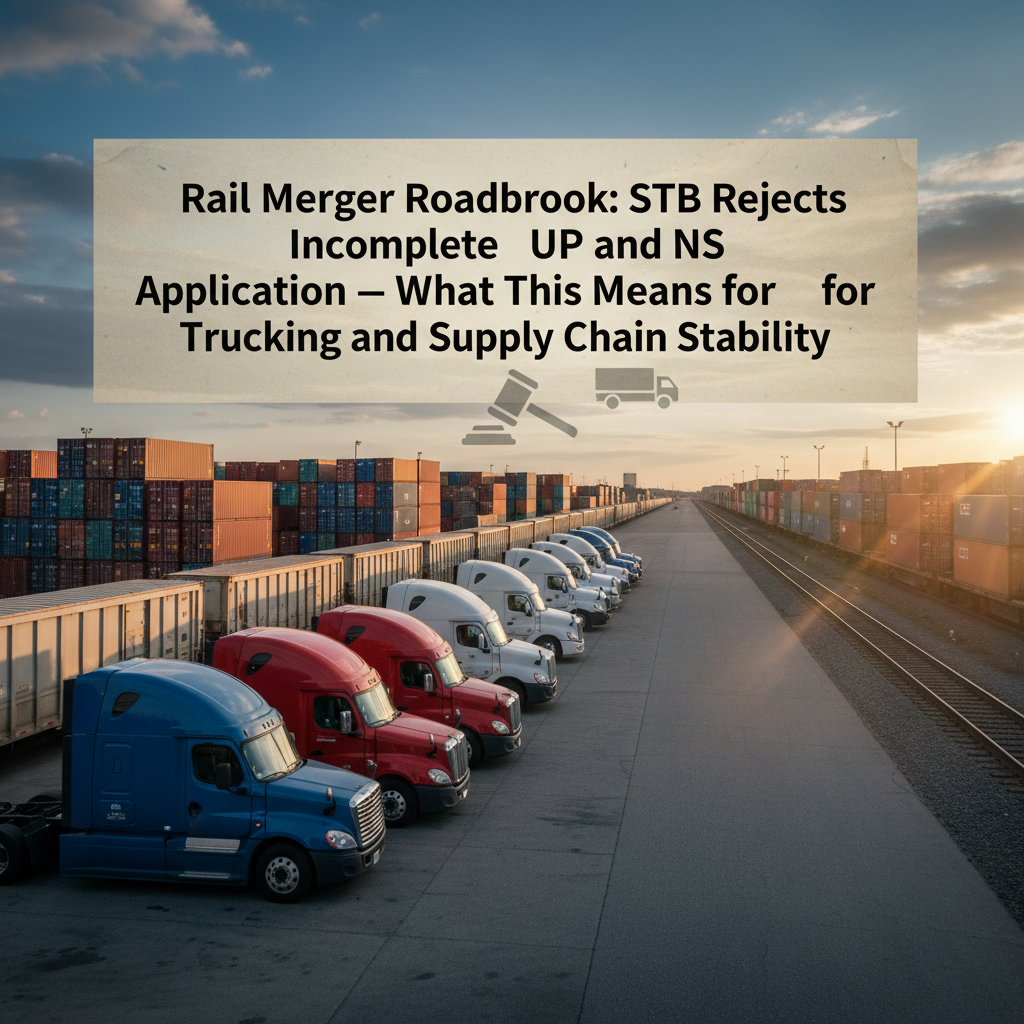
The intricate dance between rail and road freight is often characterized by competition, cooperation, and, occasionally, regulatory upheaval. A recent, significant development in the rail sector has sent ripples through the entire North American supply chain, directly impacting the operations and strategic planning of trucking companies and CDL professionals across the continent.
In a move that underscores the rigorous oversight of major infrastructure consolidation, the Surface Transportation Board (STB) formally rejected the joint merger application submitted by two of the nation’s largest Class I railroads, Union Pacific (UP) and Norfolk Southern (NS). The STB deemed the extensive, 7,000-page application “incomplete,” citing critical omissions regarding post-merger market share projections and other legally mandated documentation. This rejection is not merely a bureaucratic hurdle; it is a powerful signal that any attempt to significantly consolidate the already concentrated rail industry will face intense scrutiny, particularly concerning its potential effects on competition, service reliability, and the overall freight ecosystem.
For CDL drivers and fleet managers, understanding this regulatory environment is crucial. While rail and trucking are often viewed as distinct modes, their operational fates are inextricably linked. Changes in rail capacity, pricing, or service quality immediately translate into shifts in demand, congestion, and operational pressure on the trucking sector. A proposed merger of this magnitude—combining two giants that control vast swathes of the eastern and western U.S. rail networks—had the potential to fundamentally reshape intermodal freight movement, port access, and long-haul trucking strategies.
The Anatomy of the Rejection: Why the STB Said No
The STB, the federal agency responsible for economic regulation of the U.S. freight rail industry, issued a 15-page decision detailing the deficiencies in the UP and NS filing. The core issue was a lack of comprehensive data necessary for the board to assess the proposed merger's impact fully. Specifically, the STB highlighted the absence of crucial information required under federal law and agency regulations, particularly concerning market dynamics post-consolidation.
Missing Market Share Projections
One of the most glaring omissions cited by the STB was the failure of UP and NS to provide detailed projections of their combined market share following the merger. In competitive analysis, market share data is paramount. It allows regulators, competitors (like BNSF), and, most importantly, shippers to gauge the level of market power the merged entity would wield. Without these projections, the STB could not adequately determine if the proposed consolidation would lead to an undue reduction in competition, potentially resulting in higher rates or diminished service quality for shippers.
Inadequate Documentation and Stakeholder Concerns
Beyond market share, the application was found wanting in other required documentation. This bureaucratic setback capped a tumultuous period following the application’s submission in December. Rival carriers, most notably BNSF, and a wide array of major shippers immediately filed their own opposition, arguing vehemently that the application was insufficient and that such a merger would be detrimental to the national rail network. BNSF, in particular, applauded the STB’s decision, emphasizing the importance of core information critical to determining the proposed merger’s impact on competition.
This immediate and vocal opposition from key industry players underscores the high stakes involved. Any reduction in the competitive landscape of Class I railroads often raises concerns about the potential for service deterioration—a critical factor that directly pushes freight onto the highways and into the hands of truck drivers.
The Trucking Perspective: Intermodal Shifts and Capacity Demands
For fleet managers and owner-operators, the health and structure of the rail industry are not abstract concepts; they are daily operational realities. The rail network serves as a primary competitor and, simultaneously, a crucial partner, especially in the intermodal sector. The STB’s rejection of the incomplete application, at least temporarily, maintains the current competitive balance, which has several immediate implications for the trucking industry.
1. Stability in Intermodal Operations
A massive merger like UP/NS would inevitably lead to significant operational integration challenges, route restructuring, and potential service disruptions—at least in the short to medium term. Historically, major rail mergers have resulted in periods of congestion, delays, and poor service metrics as the combined entity struggles to harmonize systems and networks. When rail service falters, shippers immediately pivot to truckload (TL) carriers to maintain their supply chains.
- Actionable Insight for Fleets: The rejection provides a temporary reprieve from potential rail-induced service chaos. Fleet managers should use this period of relative stability to optimize current intermodal partnerships and long-haul routes, knowing that the competitive landscape remains predictable for now. If the merger is eventually refiled and approved, be prepared for a surge in TL demand as shippers de-risk their reliance on a newly merged, potentially unstable rail network.
2. Maintaining Competitive Pressure
Trucking’s competitive advantage over rail often lies in flexibility, speed, and reliability for shorter hauls and time-sensitive freight. However, rail dominates in long-haul, high-density corridors, particularly in the movement of bulk commodities and international container traffic. The current structure, with four major Class I railroads (UP, BNSF, NS, CSX), maintains a degree of internal competition that benefits shippers.
If UP and NS had merged, the resulting entity would have controlled an overwhelming share of the transcontinental and North-South routes, potentially reducing the incentive for investment in service quality and efficiency. This could lead to a scenario where shippers are forced to pay higher rates for lower quality rail service, pushing more freight onto the roads. While this might sound like a boon for trucking capacity utilization, it could also lead to increased highway congestion, greater pressure on driver hours, and potentially destabilize freight rates by flooding the market with previously rail-bound commodities.
3. Focus on Driver Retention and Service Quality
In the face of ongoing driver shortages, fleet managers must constantly focus on maximizing efficiency and improving the quality of life for their CDL professionals. Rail service disruptions often exacerbate the challenges faced by truck drivers, particularly in intermodal yards and port facilities. When rail operations are inefficient, drivers spend excessive time waiting for chassis or containers, leading to lost hours, reduced earnings, and increased frustration.
- Impact on Drivers: The current regulatory pause means that the existing, albeit imperfect, intermodal network structure remains intact. This allows carriers to better predict turnaround times at rail ramps. Drivers benefit from stability; unpredictable delays caused by massive operational mergers are a significant source of stress and reduced productivity. Trucking companies should leverage this stability to negotiate better service-level agreements with existing rail partners and intermodal facilities, ensuring drivers are not penalized by unnecessary dwell time.
The Broader Economic Context: Supply Chain Resilience
The STB’s demanding stance reflects a growing national focus on supply chain resilience and the dangers of over-consolidation in critical infrastructure sectors. The COVID-19 pandemic and subsequent supply chain crises highlighted how vulnerable the U.S. economy is to bottlenecks in transportation. Regulators are now highly sensitive to proposals that could introduce systemic risk.
UP and NS had argued that the merger would modernize the national rail network, help grow rail freight, and spur industrial development. They insisted that combining their resources would create operational efficiencies that would ultimately benefit the customer. However, the regulatory environment requires proof, not just promises, especially when the potential downside involves significant harm to competition.
The Role of Precision Scheduled Railroading (PSR)
It is impossible to discuss modern rail mergers without mentioning Precision Scheduled Railroading (PSR). PSR is an operating model focused on maximizing efficiency, reducing assets (locomotives, cars, employees), and running fewer, longer trains on fixed schedules. While PSR has dramatically improved rail operating ratios, it has often been criticized by shippers and labor unions for prioritizing cost-cutting over service reliability and capacity.
If a merger were approved, the combined entity would almost certainly implement a unified, highly optimized PSR model. While this could theoretically lead to faster transit times on certain trunk lines, it often reduces network flexibility, making the system brittle and susceptible to widespread failure during unexpected events (like severe weather or sudden volume surges). This brittleness is precisely what drives freight back to the highways, creating sudden, unpredictable demand spikes for trucking capacity.
What Happens Next: A Fresh Deadline and Strategic Refiling
Following the rejection, the STB provided UP and NS with a fresh deadline to notify the board of their plans for refiling. The railroads have two primary options:
1. The Quick Fix: Providing Missing Data
Union Pacific has already indicated that it will provide the additional information requested by the STB. This suggests the railroads believe the application’s incompleteness was a matter of documentation rather than a fundamental flaw in the merger’s structure or competitive impact analysis. They must quickly compile the missing post-merger market share projections and other required legal documents and resubmit the application. If they choose this route, the STB will then conduct another 30-day completeness review.
2. The Strategic Retreat and Restructuring
Alternatively, the railroads could take a longer pause, strategically restructure the proposed merger, or significantly enhance their competitive impact analysis to preempt future regulatory concerns. Given the intense opposition from BNSF and major shippers, merely filling in the blanks might not be enough. They may need to offer substantial concessions, such as granting trackage rights to competitors or guaranteeing certain service metrics, to sway the STB.
For the trucking industry, the timeline of a refiling is critical. If the railroads can quickly satisfy the STB’s data demands, the merger review process will resume, keeping the potential for future rail consolidation and associated service volatility on the immediate horizon.
Practical Takeaways for CDL Drivers and Fleet Management
This regulatory setback in the rail sector offers valuable lessons and strategic opportunities for the trucking industry:
For Fleet Managers:
- Diversify Intermodal Strategy: Do not rely exclusively on one rail partner. Maintain relationships and capacity agreements with multiple Class I railroads and third-party logistics providers (3PLs) specializing in intermodal. This buffers your operation against service disruptions stemming from either regulatory changes or operational failures.
- Monitor Rail Service Metrics: Pay close attention to publicly available rail service metrics (e.g., dwell time, trip plan compliance). Any significant decline in rail service, whether due to operational issues or merger-related integration, signals an impending surge in demand for over-the-road (OTR) trucking capacity. Adjust pricing and capacity allocation proactively.
- Invest in Driver Experience at Ramps: Since rail ramps are often pain points, invest in technology and processes that minimize driver dwell time. Implementing real-time tracking, pre-notification systems, and working closely with terminal operators can significantly improve driver productivity and satisfaction, offering a competitive edge over carriers that struggle with intermodal inefficiency.
For CDL Drivers:
- Understand Intermodal Dynamics: If you haul intermodal freight, recognize that the efficiency of your job is directly tied to the efficiency of the rail network. Be prepared for potential delays at rail yards, especially if the merger process restarts and causes operational strain on the railroads.
- Advocate for Efficiency: Report excessive dwell times and inefficient processes at rail ramps to your dispatch or fleet manager. Your feedback is crucial data that helps the company negotiate better service and allocate capacity more effectively.
- Long-Haul Opportunities: If a major rail merger eventually destabilizes long-haul rail capacity, expect increased opportunities for high-paying, long-distance OTR runs as shippers seek reliable alternatives to move freight across the country.
In conclusion, the STB’s rejection of the incomplete UP/NS merger application is a victory for regulatory oversight and a temporary relief for stakeholders concerned about market concentration. While the merger proposal is not dead—UP and NS are expected to refile—the incident serves as a powerful reminder that the stability of the entire supply chain hinges on the balance between competition and consolidation. For the trucking industry, this regulatory pause offers a critical window to solidify operations, optimize intermodal efficiency, and prepare for the inevitable market shifts that will occur if, or when, the rail giants attempt to combine their vast networks once again.
Helpful Resources for CDL Drivers
Comments (0)
Sign in to join the conversation
Sign In to CommentNo comments yet. Be the first to share your thoughts!
Explore More
Driver Resources
Educational guides on CDL licensing, salary expectations, and route planning tips.
Browse CDL Jobs
Find your next driving opportunity. Search by location, route type, and CDL class.
CDL Salary Guide
Understand how pay varies by experience, route type, and location in the trucking industry.