Werner Enterprises Solidifies Dedicated Dominance with $282.8 Million FirstFleet Acquisition: What It Means for CDL Drivers and Fleet Operations
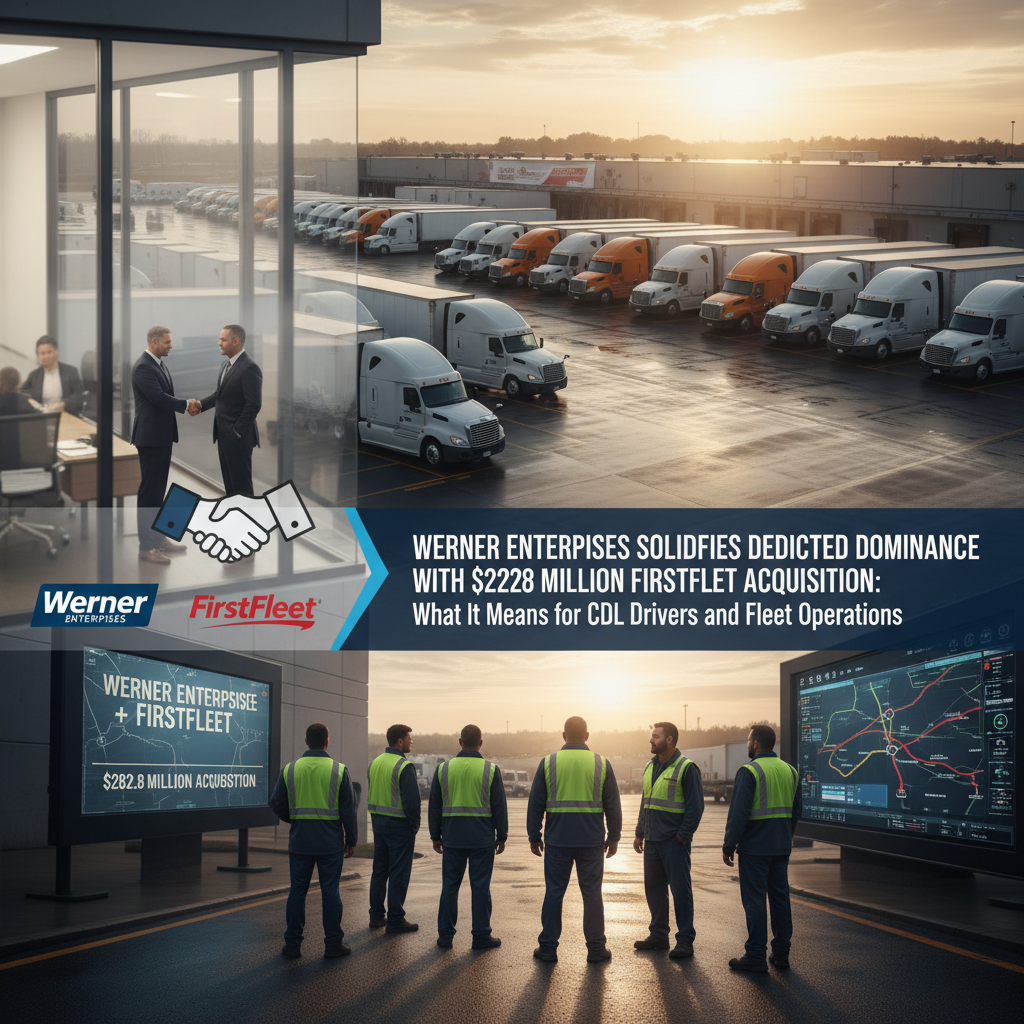
The landscape of North American dedicated truckload transportation has undergone a significant shift, directly impacting thousands of CDL professionals and the fleet management strategies of major carriers. Werner Enterprises, a powerhouse in the trucking sector, recently announced the strategic acquisition of FirstFleet, a specialized dedicated truckload provider, and its associated real estate for a combined total of $282.8 million. This monumental transaction is far more than just a financial maneuver; it represents a calculated move by Werner to substantially expand its footprint in the high-margin, highly stable dedicated segment, immediately positioning the newly merged entity as the fifth-largest dedicated carrier in the United States by power units.
The Strategic Rationale: Stability and Scale in Dedicated Trucking
For CDL drivers, the dedicated sector often represents a desirable career path offering predictable routes, consistent home time, and strong relationships with specific customers. For fleet managers and executives, dedicated contracts offer resilience against the volatile spot market, providing reliable revenue streams even during economic downturns. Werner’s acquisition of FirstFleet perfectly aligns with this strategic focus. By integrating FirstFleet’s extensive operations, Werner aims to significantly increase its exposure to 'more resilient' market segments, particularly those involving essential consumer goods like groceries, baked goods, and specialized packaging such as corrugated materials. These sectors typically maintain steady demand regardless of broader economic fluctuations, offering enhanced job security and stable freight volumes for professional drivers.
This deal is projected to boost Werner’s dedicated revenue by approximately 50%, a staggering increase that underscores the scale of FirstFleet’s existing operations. Furthermore, company executives anticipate that the acquisition will lift Werner’s total overall revenue by 20%. This financial stability is crucial for ensuring continued investment in equipment, technology, and, most importantly, driver compensation and quality of life improvements—factors that are paramount to retaining top CDL talent in a competitive market.
Operational Expansion: New Assets and Network Density
FirstFleet, headquartered in Murfreesboro, Tennessee, brings a substantial operational portfolio to Werner. The acquisition includes approximately 2,400 tractors, 11,000 trailers, and 37 valuable real estate properties strategically located near customer hubs. Crucially, FirstFleet services around 130 customer sites across the U.S., significantly enhancing Werner’s network density, particularly in the Eastern United States. For fleet managers, this increased density translates into optimized routing, reduced empty miles, and greater efficiency in asset utilization. It allows the combined organization to offer more comprehensive and geographically diverse dedicated solutions to major shippers.
For the professional truck driver, the integration of these assets means several practical benefits. A larger, newer fleet generally implies better equipment, fewer breakdowns, and access to more maintenance facilities. The expanded network of customer sites and terminals provides more opportunities for drivers to find consistent, local, or regional dedicated routes that better suit their personal needs and work-life balance preferences. The sheer volume of new trailers—11,000—also suggests improved trailer-to-tractor ratios, which helps minimize wait times and maximize revenue miles for the driving team.
Integration and Cultural Alignment: The Driver Perspective
One of the critical challenges in any large acquisition is the integration of two distinct corporate cultures and operational teams. Werner CEO Derek Leathers emphasized that the deal was built on finding a “strong cultural fit with a shared commitment” between the two companies. This focus on cultural alignment is vital, especially for the 3,500 employees, including a large contingent of CDL drivers, who are transitioning to the Werner family, often referred to as ‘Team Blue.’
For the drivers coming from FirstFleet, the transition involves becoming part of a larger, well-established national carrier (Werner ranks highly on the Transport Topics Top 100 list). This typically means access to broader benefits packages, more advanced safety technologies, and greater career advancement opportunities within the larger organization. For existing Werner drivers, the influx of new, stable dedicated contracts means a strengthened company foundation and potentially new, desirable route options as the network expands.
Fleet managers must focus intently on ensuring a smooth transition for all personnel. This involves harmonizing pay scales, standardizing operational protocols, and clearly communicating the benefits of the merger to the driving force. Successful integration hinges on making drivers feel valued and ensuring that the operational efficiencies promised by the merger translate into tangible improvements in the daily lives of the professional drivers.
The Power of Dedicated Trucking in Today’s Market
The decision by Werner to heavily invest in the dedicated segment reflects a broader industry trend. While the general truckload market experiences cyclical highs and lows, often characterized by intense pricing pressure and fluctuating demand, the dedicated sector offers a buffer. Dedicated contracts are typically multi-year agreements where the carrier provides equipment, drivers, and management exclusively for a specific customer’s supply chain needs. This model offers several key advantages:
- Predictability: Drivers benefit from consistent schedules, known routes, and regular freight volumes. This predictability is a major draw for experienced CDL holders seeking stability.
- Efficiency: Fleet managers can tailor equipment specifications, maintenance schedules, and driver training specifically to the customer’s operation, leading to higher utilization rates and lower operational costs per mile.
- Partnership: The relationship between the carrier and the shipper is deeper, fostering long-term partnerships rather than transactional spot market dealings. This stability allows for better forecasting and resource allocation.
By absorbing FirstFleet, Werner dramatically increases its capacity to serve major retailers and manufacturers who require complex, customized supply chain solutions. This enhanced capability makes Werner a more formidable competitor against other major players in the dedicated space, reinforcing its position as a top-tier carrier offering robust career paths for truck driving professionals.
Actionable Takeaways for CDL Drivers and Fleet Managers
For CDL Drivers:
- Evaluate Dedicated Opportunities: If you are seeking greater work-life balance, predictable hours, and consistent pay, the expanded Werner dedicated division is likely to be a hotbed for new job openings. Research the new routes and customer sites that FirstFleet brings to the table, especially those involving groceries and consumer staples, as these offer maximum stability.
- Focus on Specialization: Dedicated fleets often require specialized skills (e.g., knowledge of specific customer loading/unloading procedures, refrigerated transport expertise). Acquiring these specialized endorsements or training can make you a highly sought-after candidate within the newly enlarged fleet.
- Monitor Integration: Drivers transitioning from FirstFleet should actively engage with management to understand the new operational standards, technology platforms, and benefits structure to ensure a seamless shift into the Werner system.
For Fleet Managers and Operations Leaders:
- Optimize Asset Allocation: The influx of 2,400 tractors and 11,000 trailers requires meticulous planning. Fleet managers must work quickly to integrate maintenance schedules, telematics systems, and driver assignments to maximize the utilization of these new assets and ensure compliance across the board.
- Standardize Safety and Training: Maintaining a unified standard of safety and operational excellence is paramount. Managers must implement standardized training programs that blend the best practices of both Werner and FirstFleet, focusing on minimizing risk and maximizing driver retention through supportive management.
- Leverage Network Density: The increased density, particularly in the Eastern U.S., presents opportunities for backhaul optimization and regional hub development. Managers should analyze the combined network to identify potential new relay points or consolidation centers that can drive down costs and improve service reliability.
The Future of the Combined Fleet
Werner’s acquisition of FirstFleet is a clear signal that the company is doubling down on stability and specialized service offerings. By paying $282.8 million, Werner is investing not just in equipment and real estate, but in the long-term, resilient revenue streams provided by dedicated contracts. This move strengthens the entire organization, providing a more secure platform for growth and ensuring that the company remains competitive in attracting and retaining the best professional truck drivers in the industry. As the integration proceeds, the trucking community will watch closely to see how this newly expanded dedicated powerhouse leverages its scale to redefine efficiency and service in the North American supply chain.
Helpful Resources for CDL Drivers
Comments (0)
Sign in to join the conversation
Sign In to CommentNo comments yet. Be the first to share your thoughts!
Explore More
Driver Resources
Educational guides on CDL licensing, salary expectations, and route planning tips.
Browse CDL Jobs
Find your next driving opportunity. Search by location, route type, and CDL class.
CDL Salary Guide
Understand how pay varies by experience, route type, and location in the trucking industry.